Mumbai, Sep 25: The Geojit CUSAT Centre of Sustainability Studies, has launched the ‘ESG Guidebook for Keralam’, developed in collaboration with the Global Reporting Initiative, a leading international organisation for sustainability reporting standards.
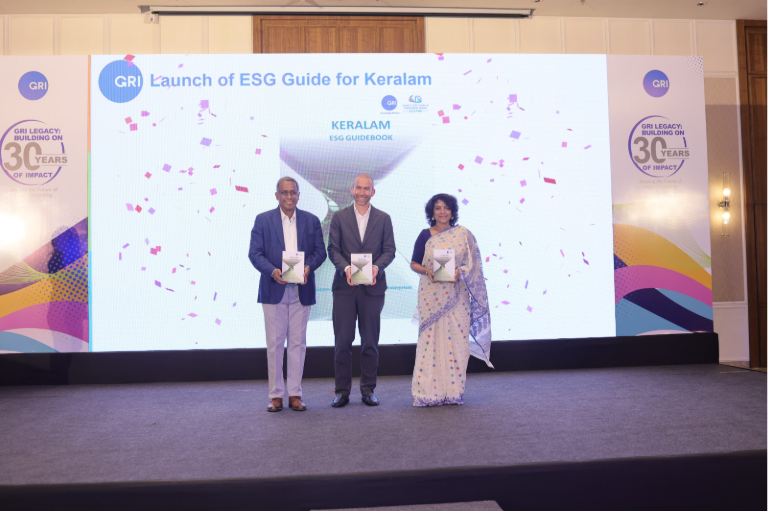
The guidebook is designed to help enterprises, including MSMEs, navigate the growing importance of Environmental, Social and Governance (ESG) practices and translate global sustainability principles into practical action. It provides sector-specific guidance across all 22 priority industrial sectors identified for Keralam, offering businesses a structured approach to identifying relevant ESG priorities and integrating them into their operations.
The guidebook comes against the backdrop of a distinctive sustainability landscape in Keralam. Unlike broad ESG frameworks that can often be difficult for businesses to translate into action, the guidebook takes a sector-specific approach, identifying the ESG issues that are most relevant to individual industries. The guidance is cross-referenced with globally recognised frameworks, including GRI and SASB, and is structured as a step-by-step adoption journey for enterprises at different stages of their sustainability journey.
For businesses, stronger ESG practices can contribute to improved operational efficiency, greater resilience to environmental and market risks, enhanced access to funding and global capital, and stronger stakeholder and customer confidence.
The guidebook was launched by Bastian Buck, Chief of Standards, GRI, Aditi Haldar, South Asia Director, GRI and Joseph Martin Chazhoor Francis, CEO, GCCOSS, at the “GRI Legacy: Building on 30 Years of Impact – Shaping the Future of Impact Reporting in India” event held in Mumbai recently.
Speaking at the launch, Dr. Junaid Bushiri, Vice Chancellor, CUSAT, said:
“The ESG Guidebook for Keralam takes a practical approach to embedding sustainable practices across enterprises in the State. By bringing global sustainability principles into a framework that reflects the realities of Keralam’s businesses and environment, the guidebook can help enterprises create shared value for the economy and society while contributing to the protection of the State’s valuable ecology.”
Joseph Martin said,
“ESG is increasingly moving from being a reporting requirement to becoming an important part of how businesses build resilience, manage risk and remain competitive. However, for many enterprises, particularly MSMEs, the challenge is knowing where to begin and how to translate broad ESG principles into actions that are relevant to their businesses. The ESG Guidebook for Keralam seeks to bridge this gap by bringing global sustainability frameworks into a practical, sector-specific roadmap. We believe this initiative can help Keralam’s enterprises approach sustainability not simply as a compliance exercise, but as an opportunity to build stronger, more resilient and future-ready businesses.”
GCCOSS brings together CUSAT’s academic expertise with industry experience to support enterprises in their sustainability transition. The Centre works across areas including Digital for Sustainability, Sustainable Infrastructure, Sustainable Finance and Energy Transition, with a focus on specialised training, applied research and sustainability solutions.
Following the launch, the ESG Guidebook for Keralam will be made available on Amazon and will be supported by a series of sector-focused webinars and workshops across Keralam. These programmes will provide enterprises with an opportunity to engage with ESG experts and better understand the application of sector-specific sustainability practices.
Enterprises interested in obtaining a pre-release copy of the guidebook may write to Joseph.martin@cusat.ac.in.